Voice Screening: A New Era for Youth Voice Health in 2026
Reading Time: 2 minutesVoice screening is evolving in South Africa with a new low-cost, smartphone-compatible device developed by UP researchers. This innovation makes voice screening more accessible, especially for digitally active youth. Learn how voice screening tools are shaping early detection, why they matter in 2026, and how young people can benefit from monitoring their vocal health in a tech-driven world where communication is constant and often voice-based.
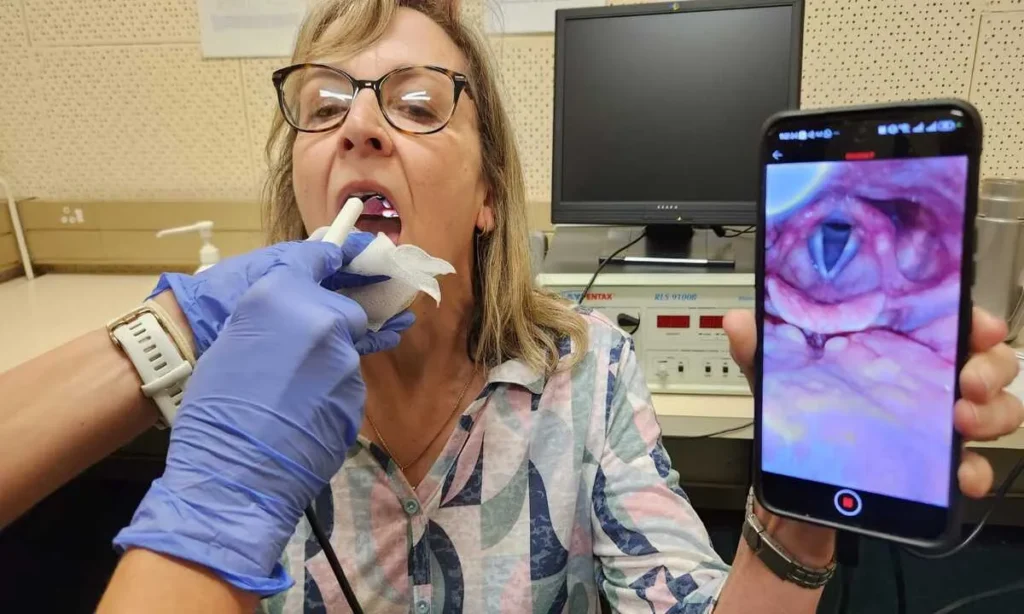
A researcher from the University of Pretoria demonstrates how easy it is to use their voice screening tool. Image: Supplied
Voice screening is becoming more important than ever.
In a world where young people are constantly online, voice screening is becoming more important than ever. Whether through voice notes, podcasts, or video content, today’s digitally-native generation relies heavily on their voices. A new innovation from researchers at the University of Pretoria (UP) is set to transform how voice screening is accessed across South Africa.
Why Screening Matters in a Digital Generation
It is the process of assessing vocal health to detect potential disorders early. Studies suggest that up to one in five people will experience a voice issue at some point, making voice screening a crucial preventative tool. For young people creating content or communicating daily online, vocal strain is becoming increasingly common.

Low-cost, smartphone-compatible
The newly developed device by UP researchers is a low-cost, smartphone-compatible tool that allows clinicians—and even trained users—to capture high-resolution images and videos of vocal cords. This makes screening more accessible, especially in underserved communities where specialized equipment is often unavailable.
Screening Technology Is Changing
In 2026, voice screening is no longer limited to hospitals. Advances in mobile health (mHealth) and AI-powered diagnostics are making vocal screening faster and more portable. Tools like the UP device reflect a global shift toward affordable, tech-driven healthcare solutions.
Earlier detection of vocal issues
For young South Africans, this means earlier detection of voice issues, better self-awareness, and fewer long-term complications. As remote work, content creation, and digital communication grow, screening becomes an essential part of maintaining overall health.
This innovation highlights how technology can bridge healthcare gaps while empowering youth to take control of their wellbeing—one voice at a time.