AI Model Successfully Targets Up to 240 Hours of Recovered Work Annually

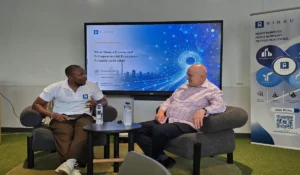
Image Credit: Paul Domanski
AI Systems developer Paul Domanski plans to reduce 240 staff hours annually in a seven-person organization, find out more about his plan.
Domanski from Cape Town launched Domanski AI’s In-Seat AI methodology to automate repetitive work within existing employee roles, with an early implementation identifying a workflow that consumed between 128 and 240 staff hours annually in a seven-person organization.
A Different Approach to Artificial Intelligence
Domanski AI is seeking to change how businesses measure their investment in Artificial Intelligence by focusing on recovered productive capacity rather than employee replacement. Domanski said the model is designed to install Artificial Intelligence into existing roles rather than use technology in place of employees.
“Too many companies are renting Artificial Intelligence instead of building business assets. Our model is simple. We install Artificial Intelligence into people, not in place of them,” explained Domanski.
The In-Seat AI methodology developed by Domanski Artificial Intelligence focuses on automating repetitive work within existing roles. Unlike generic Artificial Intelligence subscriptions and one-size-fits-all training, Domanski Artificial Intelligence’s approach centres on bespoke systems designed around specific business workflows.
For Domanski, the objective is to identify where employees spend time on repetitive processes and determine whether Artificial Intelligence can reduce that workload.

Measuring the Hours Recovered
An early implementation gives the model a specific example of the type of workflow it is targeting. The process, identified within a seven-person organization, consumed between 128 and 240 staff hours a year.
Based on a representative annual employment cost of R600 000 per employee, the workflow represented approximately R37 000 to R69 000 in annual salary costs.
Redirecting time towards production
Rather than treating automation as a reason to reduce headcount, Domanski aims to recover employee capacity and redirect that time towards productive work. The model is designed to measure the workflow before and after implementation.
These measurements include the time spent on the process, correction rates, quality improvements and whether recovered capacity is redirected towards productive activities. The model therefore places emphasis on measurable outcomes rather than simply introducing Artificial Intelligence into a business.

Measuring workplace capacity
The 240-hour example provides a concrete illustration of the potential scale of repetitive work within a small organization. Domanski is using this type of measurement to frame Artificial Intelligence investment around workplace capacity, rather than headcount reduction or technology adoption alone.
At its core, their message is that businesses can use artificial intelligence to strengthen existing roles by automating repetitive work while keeping employees and human judgement central to the process.