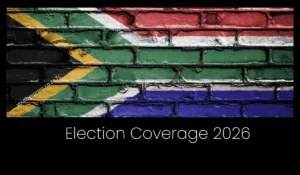
Local Government Crisis Deepens Ahead of 2026 Elections
Reading Time: 4 minutesThe local government elections for South Africa takes place on 4 November 2026 and there is a lot to unpack. Read more about what we have observed.

Local government elections are around the corner. And citizens across the country are preparing to vote for the party that suits them best.
Local government elections countdown
Citizens of South Africa vote on 4 November 2026 to decide which political parties control municipalities across the country. And with this change local governments across Mzansi face mounting financial pressure, deteriorating infrastructure and persistent service delivery failures. With unemployment remaining above 30% and economic growth under pressure, the election will test which political party can provide the leadership, financial discipline and economic strategy needed to make municipalities work. They will also need to call for calm and non-violence when speaking up against the failures government faces.
Citizens are deeply affected
The stakes are particularly high because local government affects the daily economic lives of households and businesses. Water, electricity, roads, sanitation, waste removal and municipal administration all influence the cost of living and doing business. The Auditor-General’s 2024/25 assessment found that only 39 of South Africa’s 257 municipalities achieved clean audits, while widespread weaknesses remained in financial management and accountability. Auditor-General of South Africa, Tsakani Maluleke said there had been “limited progress” in strengthening governance and improving service delivery. The assessment was released on 24 June 2026.

Why local government has become an economic issue
Local government is no longer simply a service delivery concern. It has become an economic question. Businesses depend on reliable municipal services to operate and invest. When electricity, water, roads and waste systems fail, operating costs rise and investment decisions can be affected. The Auditor-General found that 99 municipalities received modified audit opinions in 2024/25, while 195 submitted financial statements containing material misstatements. Maluleke warned that the consequences extend beyond accounting.
That warning puts the performance of local government at the centre of the election.
“The financial and non-financial costs of non-compliance remained significant, contributing to losses, weakened accountability and a lack of transparency.”
Tsakani Maluleke, Auditor-General of South Africa, 24 June 2026.
The ANC faces a credibility test
The ANC’s 2026 manifesto promises stronger infrastructure maintenance, improved municipal finances, better administration and greater support for local economic development. The problem is that the party has governed most municipalities for decades.
That means voters can compare its promises with its record.
The ANC’s challenge is therefore not simply explaining what needs to change. It must explain why previous administrations failed to implement many of the reforms it is now proposing.
The DA is selling competence
The DA’s approach focuses on professional administration, merit-based appointments, financial discipline, infrastructure investment and reducing red tape for businesses.
Its economic argument is that municipalities should create the conditions for private investment and job creation rather than become the primary source of employment.
The challenge is whether that model can work in municipalities with weak revenue collection, ageing infrastructure and limited administrative capacity.
The EFF wants a bigger role for the state
The EFF proposes greater municipal employment, insourcing, stronger internal technical capacity and procurement aimed at supporting local businesses and cooperatives. Its model would make local government a larger economic actor.
But the financial question is unavoidable. A larger workforce costs money, while expanded free services and debt relief can reduce municipal revenue. The EFF therefore has to demonstrate how its proposals can be financed without worsening the financial problems already affecting municipalities.
Coalitions could determine who governs
Johannesburg provides the clearest example of the political challenge.
The economic capital has experienced repeated leadership changes and continuing service-delivery problems. Reuters reported in September that Johannesburg had seven mayors in five years.
That makes coalition government a major issue in the election.
If voters produce fragmented councils, parties will need to show that they can govern together rather than simply divide political positions.
The real test is performance
South Africa does not lack manifesto promises. It lacks consistent implementation.
Voters should therefore ask what each party has achieved where it already governs.
Have municipal finances improved?
Have audit outcomes improved?
Are suppliers being paid?
Is infrastructure being maintained?
Are water losses falling?
Is electricity becoming more reliable?
Maluleke has argued that stronger institutions and ethical leadership are essential to improving local government.
“Sustainable improvement in local government begins with deliberate choices in appointing competent individuals, strengthening institutional capacity and fostering a culture of integrity,” Tsakani Maluleke, Auditor-General of South Africa, 3 February 2026.
Who can actually fix local government
The 2026 election offers voters competing approaches.
The ANC is relying on experience and a developmental model but must answer for its record. The DA is offering professional administration and private-sector-led growth but must prove its model can work beyond its strongest municipalities. The EFF wants a larger state role but must answer the fiscal question.
The IFP, ActionSA and Patriotic Alliance are also offering alternatives focused on competence, economic development, services and financial management.
The decisive question is not which party has the longest manifesto.
It is which party can demonstrate that its promises are affordable, measurable and achievable.
The Auditor-General’s warning provides the context. The parties now have to provide the evidence.
For voters, the choice is ultimately about trust.
Who can balance municipal finances, maintain infrastructure, deliver reliable services and create an environment where businesses can invest and jobs can be created?
South Africa does not need another five years of promises.
It needs proof that local government can work.
Check if you are registered to vote!
Let us know what you think about our local government in the comments.