JSE Plunges 7%: Alarming Warning Signs for South African Investors
Reading Time: 4 minutesThe Johannesburg Stock Exchange (JSE) Top40 recorded its lowest weekly close of 2026.
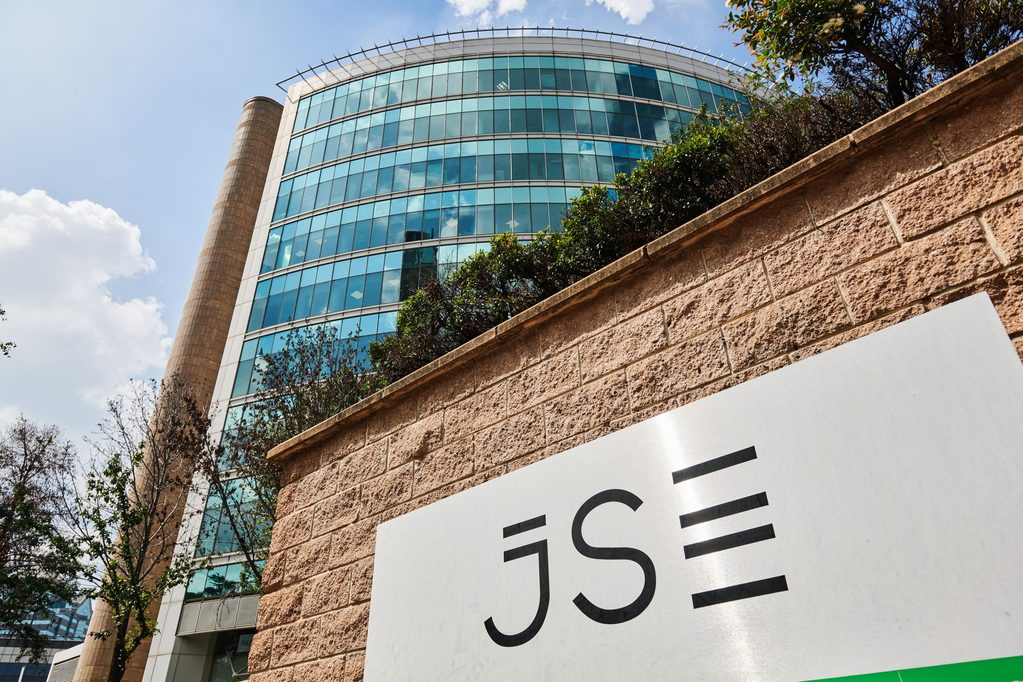
South Africa’s stock market is facing renewed pressure after the JSE Top 40 recorded its lowest weekly close of 2026, while the broader JSE All Share Index lost nearly 7% during the first nine months of the year, as global market volatility and a 0.2% contraction in the country’s second-quarter gross domestic product (GDP) intensified concerns about corporate earnings and the outlook for investors.
The decline has raised a central question for investors: does the JSE offer an opportunity to buy shares at lower prices, or should they prepare for further losses? Market performance, weakening economic activity and falling precious-metal shares provide important context for the debate, although the available evidence does not establish whether the market has reached its bottom.
JSE losses revive the buy-or-brace debate
The JSE’s performance has deteriorated following a strong 2025, when the All Share Index gained approximately 39%, according to Moneyweb’s Adriaan Kruger in a report published on 5 October 2026.
The same report found that the All Share Index had declined by nearly 7% during the first three quarters of 2026. Moneyweb’s 12 October market programme subsequently reported that the JSE Top 40 had recorded its lowest weekly close of the year.
The figures indicate a difficult year for local equities following the previous year’s gains. However, the All Share Index and Top 40 measure different groups of shares, and their performances should not be treated as interchangeable.
The JSE’s decline has also not affected all listed companies equally. Investors must distinguish between businesses experiencing temporary share-price pressure and those facing more persistent challenges to their earnings.
Economic growth has weakened
Statistics South Africa reported that GDP decreased by 0.2% in the second quarter of 2026, following an increase of 0.4% in the first quarter.
The contraction followed six consecutive quarters of economic expansion, according to the South African Reserve Bank’s September Quarterly Bulletin.
The statistics agency reported that mining and quarrying contracted by 3.0%, manufacturing declined by 1.8%, and trade, catering and accommodation fell by 1.9% during the quarter.
These figures suggest that several important industries experienced weaker activity. For companies listed on the JSE, slower economic growth can create challenges where revenue depends on consumer spending, industrial production or demand for raw materials.
However, the economic figures do not prove that every company listed on the JSE will report weaker earnings. Some businesses may be supported by international revenue, stronger demand in particular markets or company-specific improvements.
Precious-metal shares have weighed on performance
The performance of mining shares has been another factor behind the market’s weakness.
In Moneyweb’s 5 October report, Peter Little, a global fund manager at Anchor Capital, attributed a significant portion of September’s losses to precious-metal miners.
“Gold (-15%) and platinum miners (-7%) cost the index more than 3% in September as precious metal prices fell,” Little said.
The comment identifies a specific contributor to the JSE’s performance rather than suggesting that every sector declined for the same reason.
Precious-metal prices can influence the revenue expectations and valuations of mining companies, although the effect on individual producers also depends on production costs, output, exchange rates and operational performance.
For investors, the performance of major mining shares matters because movements in large companies can influence a market-capitalisation-weighted index such as the JSE All Share Index.
Global financial uncertainty remains a risk
International developments are adding to uncertainty surrounding the JSE.
The International Monetary Fund’s October 2026 Global Financial Stability Report identified risks associated with a potential slowdown in artificial-intelligence investment, rising government bond yields and cybersecurity threats.
Changes in international borrowing costs can affect the relative attractiveness of equities, while movements in commodity prices and the rand can influence South African companies differently depending on their business models.
For the JSE, these external risks complicate the outlook because local shares are influenced by both domestic economic conditions and international investor sentiment.
Nevertheless, the IMF’s warnings do not establish that a further decline in South African shares is inevitable. They identify financial risks that investors should consider when assessing their portfolios.
Does the JSE offer value at current levels?
The market’s decline has renewed debate over whether lower share prices present buying opportunities.
A falling share price does not automatically mean a company is undervalued. Investors need to assess earnings forecasts, debt levels, cash flow, dividend sustainability and the price paid relative to the company’s financial prospects.
Some shares may become attractive if prices fall while the underlying businesses remain financially sound. Others may be declining because investors expect weaker future earnings or face evidence of deteriorating business conditions.
The JSE’s overall performance cannot settle that question for individual companies. A broad index can fall even when some businesses remain profitable and attractively valued.
Investors considering the JSE must therefore distinguish between a lower price and better value. The two are not necessarily the same.
What happens next?
Future economic data, corporate earnings announcements, commodity prices and global financial developments will help determine how the JSE performs in the months ahead.
The available evidence confirms that the All Share Index declined during the first nine months of 2026, the Top 40 recorded its lowest weekly close of the year, and South Africa’s economy contracted in the second quarter.
These developments provide reasons for caution, but they do not prove that a prolonged market downturn will continue or that a recovery is imminent.
For investors, the central issue is whether individual shares offer sufficient potential returns to justify the risks involved.
The JSE’s recent lows have sharpened the choice between buying and bracing for further losses. Ultimately, that decision requires an assessment of company fundamentals, valuations and economic conditions rather than relying on the direction of the market alone.
Editor’s Note: Lekgeretla Makofane is an intern journalist who is interested in financial news apart from all of the other topics he enjoys researching, send him a brief idea of your story for publishing.