7 Powerful Reasons to Rethink Drinking Alcohol Before It Becomes a Habit
Reading Time: 10 minutesAlcohol is often introduced through family, celebrations and stress. Explore what children learn about alcohol and seven powerful health reasons to consider avoiding it.

Alcohol: Where Does Our Relationship With Drinking Begin?
When does our relationship with alcohol really begin?
Is it when we become old enough to legally buy a drink?
Or does it begin much earlier, while we are still watching the adults around us?
For many South African families, alcohol is simply part of everyday life. It may appear at birthdays, weddings, braais, family gatherings and funerals. It may be the drink someone reaches for after a difficult day at work or during a weekend with friends.
Children are watching all of this.
They may not understand why adults drink, but they notice when alcohol appears.
They learn that alcohol can mean celebration.
It can mean relaxation.
It can mean being grown up.
It can even become associated with dealing with sadness or stress.
The World Health Organization (WHO) has described these surroundings as part of the environment that can influence young people’s attitudes towards alcohol. Its research on homes, schools and digital platforms looks at how environments can normalize alcohol and influence young people’s drinking patterns.
So perhaps the first question is not simply: When does a young person take their first drink?
Perhaps we should ask:
What did they learn about alcohol before that first drink?
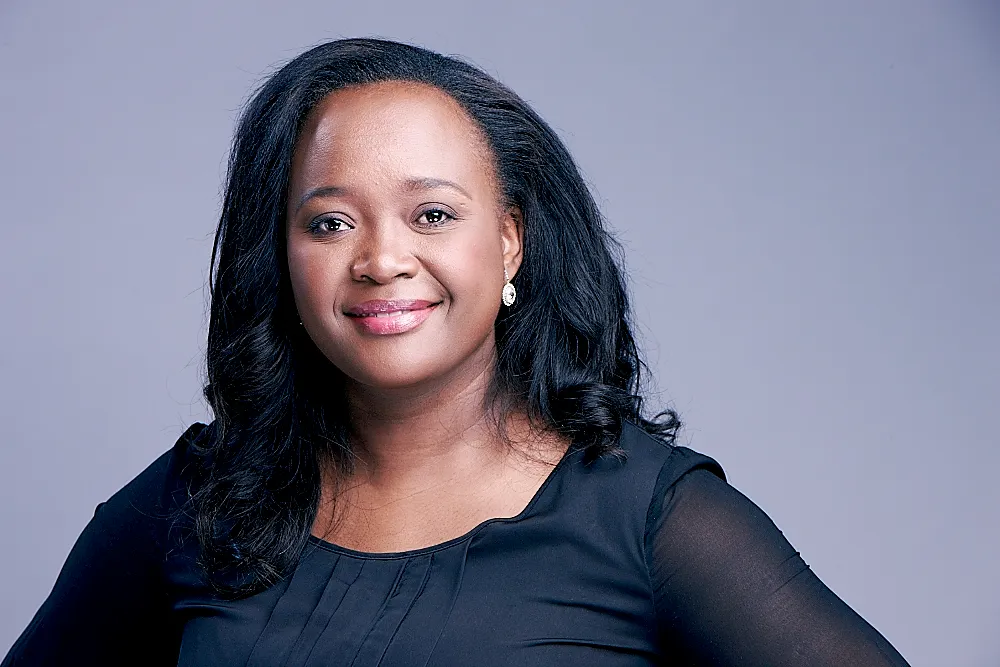
Image Credit: Supplied
What Nomcebo Dlamini says about alcohol and the home
For this article, Nomcebo Dlamini, Campaign Director of the True Cost of Alcohol Campaign at the Southern African Alcohol Policy Alliance South Africa (SAAPA SA), responded to questions from Youth Express about alcohol, families, young people and the wider drinking culture in South Africa.
Dlamini’s work focuses on alcohol policy and public-health advocacy. SAAPA SA’s True Cost of Alcohol Campaign describes itself as a national civil-society campaign working to reduce alcohol-related harm through policy advocacy.
Dlamini says a person’s relationship with alcohol can begin long before they legally drink.
Children, she explains, are constantly watching adults and forming ideas about what alcohol means. If they repeatedly see alcohol connected with happiness, relaxation, celebration or social status, those associations can become normalized.
That does not mean every child who grows up around alcohol will develop harmful drinking habits.
But the example adults set matters.
And that brings us to a difficult question.

Alcohol and the Messages We Give Children
Imagine a teenager reaching a milestone.
A father, uncle or grandfather offers him a small sip of beer.
The intention may be affectionate. It may be a family tradition. Perhaps the older man experienced exactly the same thing when he was young.
But what message does the young person receive?
This is what men do.
Dlamini says introducing alcohol to a child as part of becoming a man can help normalize the idea that drinking is connected to adulthood and masculinity.
There are similar traditions involving young women.
A birthday or milestone celebration may include a glass of champagne. The photograph is taken. The young woman is dressed up. The flute is in her hand.
The picture becomes part of the memory of becoming an adult.
Again, the question is not whether one glass determines someone’s future.
The question is why alcohol has become such a powerful symbol of adulthood.
A young person does not become mature because they can drink.
Maturity can mean responsibility, independence, emotional control, kindness and learning how to deal with difficult situations.
Alcohol does not need to be part of that lesson.
The South African government itself encourages parents to talk to children about the dangers of alcohol and to act as role models.
Nomcebo Dlamini
Children learn by watching
Dlamini says the repeated message is important.
If every celebration includes alcohol, every stressful situation is followed by alcohol and every social gathering centres around alcohol, a child may begin to see drinking as an essential part of adult life.
This is consistent with WHO research, which identifies alcohol-normalizing environments as an important influence on young people.
It is not about telling adults that they can never have a drink.
It is about recognizing that children are watching.
They notice what adults do when they are happy.
They notice what adults do when they are angry.
They notice what adults do when they are tired.
They notice what adults do when someone dies.
And they remember.
Alcohol as a Reward After a Hard Day
There is another part of the conversation that deserves attention.
Think about the person who has spent the entire day doing physically demanding work.
They are tired.
They may be worried about money. They may have family responsibilities. They may have spent the day under pressure.
At the end of the day, a beer can become a reward.
It can become the signal that the working day is over.
For some people, that drink may gradually become their main way of switching off.
Dlamini says the concern begins when alcohol becomes a person’s automatic or primary way of coping with stress.
That is an important distinction.
The question is not simply how much someone drinks.
It is also what role alcohol has taken in their life.
If someone begins to believe that they cannot relax, celebrate or deal with a difficult day without alcohol, it may be time to examine that relationship.
WHO describes alcohol as a psychoactive and dependence-producing substance and says there is no completely risk-free form of alcohol consumption.
7 Powerful Reasons to Consider Avoiding Alcohol
This is not an argument that every person who drinks will develop an alcohol problem.
It is also important not to misrepresent Harvard’s position. Harvard T.H. Chan School of Public Health researchers say the evidence around alcohol and health is complex and does not support reducing the subject to the claim that every amount of alcohol is equally dangerous.
But if someone is deciding whether to drink at all, there are several strong health reasons why not drinking can be a sensible choice.
1. Alcohol increases cancer risk
This is one of the clearest health concerns.
Alcohol is classified by the International Agency for Research on Cancer (IARC) as a Group 1 carcinogen, meaning there is sufficient evidence that it causes cancer.
Alcohol is linked to cancers including those of the mouth, throat, oesophagus, liver, bowel and breast.
WHO says there is no safe level of alcohol consumption in relation to cancer risk.
The risk generally increases as consumption increases, but even relatively small amounts can contribute to cancer risk.
For someone who does not drink, there is therefore no health reason to start drinking in the hope of gaining a health benefit.
2. You do not need alcohol to protect your heart
For many years, moderate drinking, particularly red wine, was sometimes presented as beneficial for heart health.
Harvard researchers say the science is more complicated than those older claims suggest.
Research has linked alcohol consumption with a range of health effects, including cardiovascular risks, and Harvard’s current discussion stresses the uncertainty and limitations in some of the evidence surrounding moderate drinking.
In simple terms, alcohol should not be treated as a health product.
There are many established ways to support heart health that do not involve drinking alcohol.
3. Your liver has enough work to do
The liver processes alcohol after it enters the body.
Long-term harmful drinking can contribute to liver disease, including cirrhosis.
WHO lists liver disease among the major health conditions associated with alcohol consumption.
Choosing not to drink removes alcohol-related liver risk from the equation.
That is a fairly simple health decision.
4. Alcohol can interfere with sleep
A drink at the end of the evening may make someone feel sleepy.
But feeling sleepy is not the same as getting good-quality sleep.
Alcohol can interfere with normal sleep patterns, and Harvard health reporting has highlighted the way alcohol can contribute to disrupted sleep.
That matters because sleep is not simply about closing your eyes for a few hours.
The body needs proper rest to recover.
If alcohol has become part of someone’s nightly routine, it is worth asking whether it is really helping them rest.
5. Avoiding alcohol removes the risk of alcohol dependence
Alcohol is not risk-free.
WHO describes it as a substance that can cause dependence.
Not everyone who drinks develops dependence.
But someone who never drinks does not have to worry about alcohol becoming a dependence problem.
There can be something very simple about that choice.
You do not need to wonder whether your occasional drink is slowly becoming a regular habit.
6. Alcohol can affect judgement and increase the risk of harm
Alcohol does not only have long-term health consequences.
It can also affect behaviour and judgement.
WHO links alcohol to injuries, road crashes and other forms of harm, including harm to people other than the person drinking.
That means alcohol harm is not always about someone developing a health condition years later.
Sometimes the consequences happen much sooner.
Families and communities can carry those consequences too.
7. You can develop other ways to deal with life
Perhaps this is the most practical reason.
Life will bring stress.
There will be difficult workdays.
There will be disappointment.
There will be grief.
There will also be wonderful celebrations.
If alcohol becomes the automatic response to all those emotions, it can become difficult to imagine other ways of coping.
Avoiding alcohol does not make life’s problems disappear.
It simply means alcohol does not have to become the answer.
Rest can be the answer.
A conversation can be the answer.
Prayer can be the answer.
A walk can be the answer.
Time with family can be the answer.
Sometimes, simply allowing yourself to feel what you are feeling is part of getting through it.
Alcohol Is Not Only About the Person Holding the Glass
One of the most important points in the alcohol conversation is that alcohol-related harm can affect people who are not drinking.
Families can be affected.
Children can be affected.
Other road users can be affected.
Workplaces and communities can be affected.
WHO recognizes that alcohol can cause significant harm to people other than the person consuming it.
This is particularly important when we talk about funerals, celebrations and family gatherings.
A funeral may bring people together to remember someone they loved.
A wedding may celebrate two people starting a new chapter.
A birthday may mark another year of life.
None of these moments needs alcohol to have meaning.

What about bachelor and bachelorette parties?
The same question applies to bachelor and bachelorette celebrations.
Heavy drinking is sometimes presented as part of the fun . . . one final night before marriage.
But why should a major life change require excessive drinking?
Celebration does not need intoxication.
A memorable occasion does not have to be measured by how much alcohol was consumed.
Perhaps we need to become more creative about how we celebrate the important moments in our lives.
What Happens When Alcohol Becomes the Answer to Grief?
There is another uncomfortable tradition.
Funerals.
In some communities, people gather for large wakes after the funeral. They eat, talk, remember the person who has died and, sometimes, drink heavily.
It can be described as a final celebration of a life.
But grief is not something alcohol can solve.
Dlamini points out that alcohol is sometimes used as a socially accepted way of managing difficult emotions.
Someone is grieving, so alcohol is offered.
Someone is stressed, so alcohol is recommended.
Someone is celebrating, so alcohol is expected.
The problem is that the underlying emotion remains.
And harmful drinking can create new problems for a family that is already dealing with a difficult situation.

What Should We Teach Children About Alcohol?
Perhaps the answer is not to pretend alcohol does not exist.
Children will eventually encounter it.
The better approach is to give young people honest, age-appropriate information about alcohol and its risks.
But adults also have to examine the example they set.
It is difficult to tell a child that alcohol is dangerous while presenting it as the reward for surviving a difficult week.
It is difficult to tell a teenager that alcohol is not needed for happiness while every family celebration places drinking at the centre.
And it is difficult to tell young people to make responsible choices if adults never examine their own relationship with alcohol.
Dlamini says prevention should not place the entire burden on young people.
Young people do not create the environments in which they grow up.
Adults do.
Families do.
Communities do.
Businesses and retailers also have responsibilities.
Government has responsibilities.
And society has a role in deciding what becomes normal.

So, What Needs to Change?
The National Alcohol Summit 2026 is being held from 1 to 3 October at Constitution Hill in Johannesburg, under the theme:
“What Needs to Change? Reimagining South Africa’s Response to Alcohol Harm.”
That question is bigger than asking young people not to drink.
It is bigger than telling people to drink responsibly.
It asks us to look at the environment around alcohol.
Dlamini argues that South Africa needs stronger implementation and enforcement of existing laws, better protection for young people, effective prevention and treatment services, responsible alcohol availability and greater accountability.
Her central point is that alcohol harm should not be viewed only as an individual’s problem.
It is also a public-health and societal issue.
SAAPA SA’s True Cost of Alcohol Campaign similarly focuses on the wider factors that shape alcohol consumption, including availability, affordability, marketing and normalization.
Perhaps the Conversation Needs to Start at Home
There is a lot to debate about alcohol.
There are questions about regulation.
There are questions about advertising.
There are questions about pricing and availability.
There are questions about enforcement.
But there is another question that is much closer to home.
What are we teaching children about alcohol before they ever take their first drink?
Are we teaching them that alcohol is how adults relax?
That it is how adults celebrate?
That it is how adults deal with grief?
That it is part of becoming a man or woman?
That a difficult day deserves a drink?
Or can we teach them something different?
That adulthood is about responsibility.
That celebration can happen without alcohol.
That grief needs support.
That stress can be handled in different ways.
That confidence does not come from what is in a glass.
And that saying no to alcohol can be just as normal as saying yes.
If South Africa really wants to change its relationship with alcohol, perhaps the change cannot begin only when a young person reaches the legal drinking age.
Perhaps it begins years earlier.
It begins with what they see.
It begins with what they hear.
It begins with what their families celebrate.
And, very often, it begins at home.
ICYMI