Breast Cancer Awareness: Dear young woman, get to know your body
Reading Time: 5 minutesOctober is breast cancer awareness month, Youth Express provides some pertinent information for our young readers. Find out more.
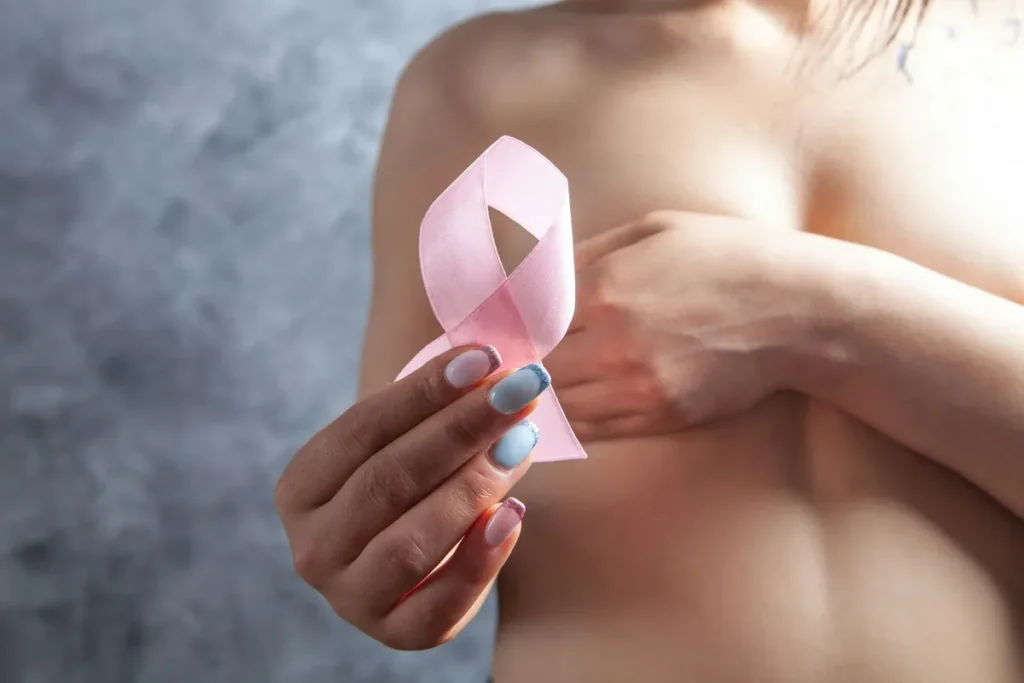
Image Credit: Sasun Bughdarya on Unsplash
This October, Youth Express is encouraging young women in South Africa to put their health first.
Breast health is not a conversation we should have only when someone becomes ill. Understanding changes in your body, knowing when to seek help, and sharing reliable information can all make a difference.
Dear young woman, when was the last time you took a moment to understand your body?
Between school, university, work, relationships and the pressure of everyday life, looking after yourself can easily fall to the bottom of your to-do list. But your health deserves your attention, too.
Breast cancer is often associated with older women, but younger women can develop it as well.
According to the World Health Organization, breast cancer is the most common cancer among women worldwide. In South Africa, CANSA has also highlighted the importance of breast health awareness among women in their late 20s and 30s.
Facts about breast cancer
- Breast cancer caused an estimated 694 000 deaths globally in 2024 and was the most common cancer in women in 164 countries out of 186 in the same year.
- Approximately 80% of breast cancers occur in women with no specific risk factors other than sex and age.
- Approximately 0.5–1% of breast cancers occur in men.
- Effective interventions for early and timely diagnosis linked to comprehensive treatment, rehabilitation and palliative care are essential to reduce the burden of breast cancer and to achieve and maintain optimal functioning and well-being. Source: WHO
How to detect breast cancer
According to the World Health Organization (WHO), possible signs of breast cancer include a new lump or thickened area, changes in breast size or appearance, dimpling of the skin, changes to the nipple, and unusual or bloody discharge. A lump may be painless. Although these signs do not automatically mean cancer, any new or unusual breast change should be assessed by a healthcare professional.
Remember: not every lump is cancer. Breasts can naturally change during the menstrual cycle and at different stages of life. However, if you notice a new or unusual change, don’t ignore it or try to diagnose yourself. Seek advice from a qualified healthcare professional.
An act of self-care
Learning what is normal for your body can help you recognize changes. Pay attention to how your breasts look and feel, including your nipples and underarm area. If you discover something new or unusual, contact a healthcare professional rather than trying to diagnose it yourself. Being breast-aware is useful, but it cannot confirm or rule out cancer.
According to the Cancer Association of South Africa (CANSA, How to Do a Breast Self-Examination), knowing how to check your breasts and recognizing unusual changes are important steps in breast health.
Let’s talk about breast health
Talk to your friends, sisters, mothers, aunts, and the young women around you. Share reliable health information, challenge myths, encourage one another to seek care when something does not feel right.
KNOW YOUR BODY, KNOW THE SIGNS, SPEAK UP, YOUR HEALTH MATTERS.
What young women need to know
Breast cancer can affect younger women, too: Although the risk of breast cancer increases with age, younger women can also develop the disease.
According to the World Health Organization (WHO) Breast Cancer Fact Sheet, breast cancer can occur at any age after puberty.
- Age and family history alone cannot determine whether a new breast change needs attention. If you notice anything unusual, seek professional medical advice rather than ignoring the change.
- You do not need a family history to be at risk: Having a close relative with breast cancer can increase risk, but many women diagnosed have no known family history.
- Knowing what is normal for your body matters: Changes in breast size or shape, skin, nipples, or the underarm area deserve attention. Most breast lumps are not cancer, but a new or unusual change should be assessed by a health professional.
- Self-checks do not replace medical examinations: Breast awareness can help you notice changes, but feeling your breasts cannot confirm or rule out cancer.
- Mammograms and other tests are recommended according to age, symptoms, and individual risk.
BREAST HEALTH QUIZ
1. If you discover a new lump in your breast but it doesn’t hurt, what should you do?
A. Ignore it because it isn’t painful.
B. Wait until it starts hurting.
C. Arrange an assessment with a healthcare professional.
2. You notice a new change in the skin of your breast, such as dimpling. What is the best next step?
A. Use a home remedy to treat the skin.
B. Wait a few months to see if it disappears.
C. Only seek help if both breasts change.
D. Arrange an assessment with a healthcare professional.
3. A person can develop breast cancer even if nobody in their family has had it.
A. True.
B. False.
4. Which statement about breast lumps is supported by WHO guidance?
A. A lump matters only when it hurts.
B. A lump can be diagnosed accurately by touch alone.
C. Every breast lump is cancer.
D. Most breast lumps are not cancer, but new lumps need assessment.
5. A breast self-check can replace a mammogram or a clinical examination by a trained healthcare professional.
A.True
B. False
6. You are worried about a breast change (changes in your breasts) and live in South Africa. Which is a suitable next step for guidance?
A. Assume it is harmless if you are young.
B. Wait until the next Breast Cancer Awareness Month.
C. Ask social media followers to diagnose it.
D. Ask a clinic or qualified healthcare professional for an assessment.
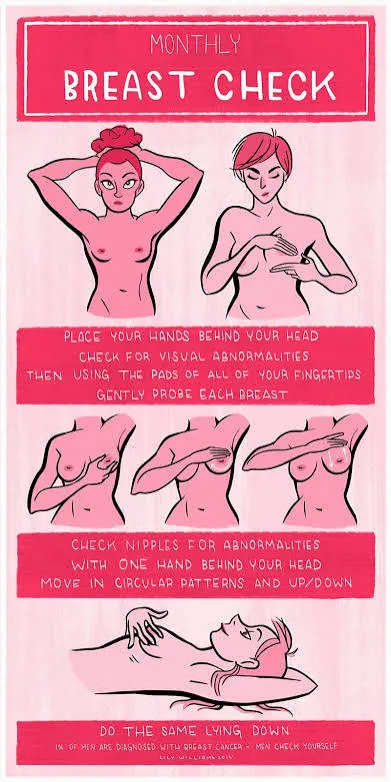
HOW CAN YOUNG WOMEN CHECK THEIR BREASTS?
Look in a mirror: In a private space, look at your breasts with your arms relaxed, then raised. Notice any new changes in their size, shape, skin, or nipples. Breasts are naturally not always identical.
Feel gently for changes: Using the pads of your fingers, gently explore each breast and the underarm area, including the area around the nipple. Become familiar with what normally feels typical for you.
Know the warning signs: Look out for a new lump, persistent thickening, skin dimpling, a new nipple change, unusual discharge, or unexplained changes in the breast or underarm.
Speak to a healthcare professional: If you notice a new or unusual change, contact a clinic or doctor promptly. Don’t wait for your next self-check, and don’t assume a change is harmless because it doesn’t hurt.
BREAST SELF EXAMINATION
1 in 20 women worldwide
According to the International Agency for Research on Cancer (IARC) 24 February 2025, approximately one in 20 women worldwide will be diagnosed with breast cancer during their lifetime. This highlights that breast cancer is a global health issue affecting women across different backgrounds. Access to reliable information, early diagnosis and appropriate medical care is essential in improving awareness and supporting better health outcomes.
Getting help
CANSA: Visit cansa.org.za for breast cancer information, screening guidance and support services. CANSA’s toll-free help desk is 0800 22 6622.
BREAST CANCER AWARENESS QUIZ — ANSWER KEY
1. C
2. D
3. True
4. D
5. False
6. D
Health note disclaimer: This article has been created for the purpose to bring awareness to our readers and to educate anyone wishing to know more about the topic. Breast cancer awareness does not diagnose or rule out cancer. Always seek a professional assessment for a new or unusual breast change.