Young Scientists Creating a Buzz Through Powerful Research in 2026
Reading Time: 3 minutesYouth Month 2026 celebrates South Africa’s young scientists as the NRF showcases inspiring researchers driving innovation, improving communities, and advancing knowledge for a better future.
As South Africa marks 50 years of Youth Month, a new generation of thinkers is stepping into laboratories, lecture halls, and communities with ideas that could shape the future. Across universities and research institutions, young scientists are proving that science is not only about formulas and experiments — it is about people, progress, and possibility.
Leading this celebration is the National Research Foundation (NRF), which continues to support brilliant minds whose discoveries are creating meaningful change in South Africa and beyond.
For many young people considering their future studies, these stories are a reminder that choosing science can become a journey of impact, innovation, and transformation.
What is the NRF
The National Research Foundation (NRF) is an independent statutory body dedicated to strengthening research and innovation in South Africa.
Its role includes:
- Supporting and funding scientific research across disciplines
- Developing future researchers and academic leaders
- Investing in postgraduate education and human resource development
- Maintaining national research facilities
- Promoting public awareness and engagement with science
- Supporting indigenous knowledge systems
- Advancing innovation that improves quality of life in South Africa
By investing in talent, the NRF is helping young scientists turn questions into discoveries and ideas into real-world solutions.

Young Scientists Leading Change
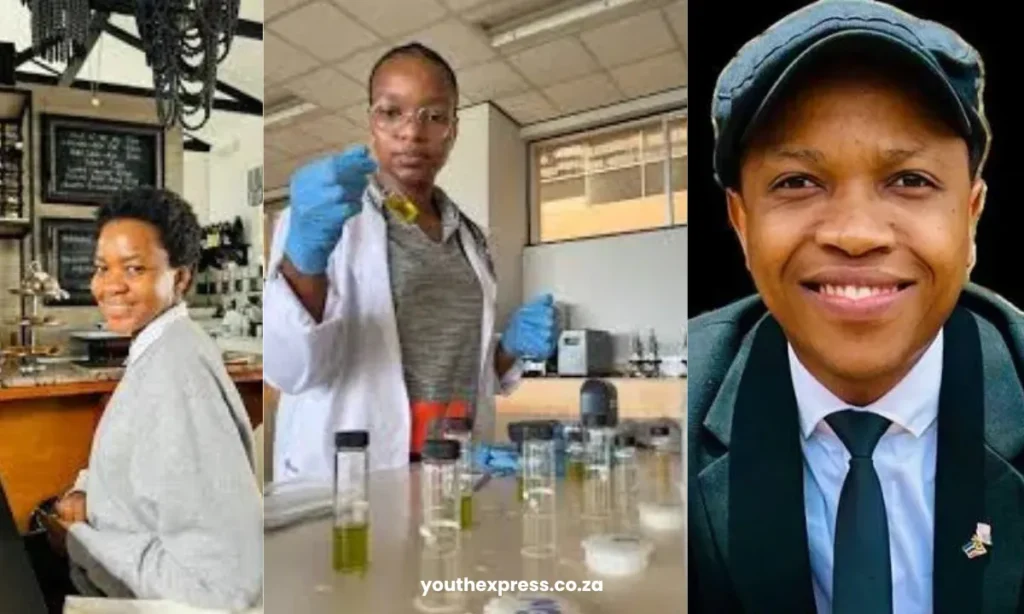
Among those being celebrated this Youth Month is Dr Khathutshelo Cathrine Hlongwane, whose journey reflects determination and possibility.
Now an NRF Postdoctoral Research Fellow at the Aquaculture Research Unit at University of Limpopo, she is conducting research in sustainable aquaculture and climate adaptation.
Her innovative work explores periphyton-based systems that improve water quality, strengthen food security, and reduce environmental impact. From humble beginnings to doctoral success, her story demonstrates how access to education and research opportunities can open doors for the next generation.
Another inspiring voice is Lesley Malungane.
As a doctoral student in Health Sciences and a professional nurse, his research focuses on strengthening public health systems, supporting HIV prevention, improving healthcare access, and promoting healthier communities.
His work reaches beyond academic papers — it touches real lives, especially in rural and underserved communities where stronger healthcare systems can make a lasting difference.
Science That Starts with Personal Experience
For Tokozani Mangesi-Nxitywa, research is deeply personal.
As a PhD candidate in Natural Science, laboratory assistant, and Junior Lecturer at Walter Sisulu University, she focuses on environmental challenges linked to water security.
Having experienced the reality of limited water access growing up, she is now using science to create sustainable solutions that protect public health and improve access to safe water in rural communities.
Her story shows that sometimes the greatest discoveries begin with everyday challenges.

Bridging Tradition and Innovation
The future of healthcare may also be shaped by researchers like Dr Lindokuhle Malibongwe Ngema.
An nGAP Lecturer in African Traditional Medicine at University of KwaZulu-Natal, Dr Ngema combines pharmaceutical sciences with indigenous knowledge systems.
His research explores evidence-based African therapeutic innovations and advanced drug delivery systems that could improve treatment outcomes for communicable and non-communicable diseases.
His work demonstrates that science can honour tradition while building the future.
Why Young Scientists Matter
Every breakthrough begins with curiosity.
The stories highlighted by the NRF show that young scientists are not waiting for tomorrow — they are already changing South Africa today.
Whether improving healthcare, protecting water resources, strengthening food systems, or advancing medicine, these researchers remind us that science is alive with possibility.
For learners deciding what to study next, Youth Month 2026 offers a powerful message:
Science is not only a subject.
It is a way to ask questions, solve problems, and create the kind of South Africa future generations deserve.