41 Feet Airlink Flyover Spectacular Had Cape Town Looking Up and Debating
Reading Time: 5 minutesThe Airlink flyover has got South Africa debating and looking up at the skies. Read more about what the South African Civil Aviation Authority had to say about it.
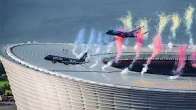
Two Airlink Embraer jets stunned an estimated 56 000 rugby fans at DHL Stadium on Saturday, 29 August 2026, when they performed a low-level formation flyover moments before South Africa faced New Zealand in the second Test of the Rugby’s Greatest Rivalry series. The Airlink flyover quickly went viral after flight-tracking service Flightradar24 estimated that the lead aircraft passed less than 50 feet above the stadium roof, with its analysis putting the clearance at approximately 41 to 46 feet.
Exciting airlink flyover reactions
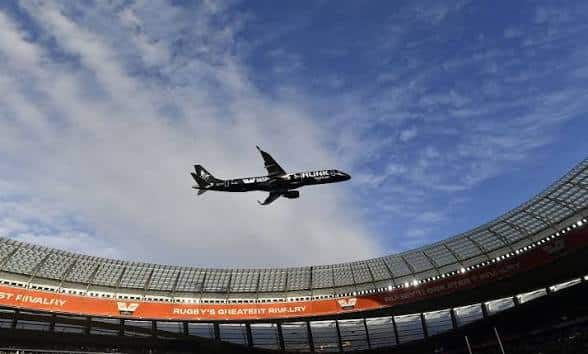
The Airlink flyover lasted just seconds, but it instantly became one of the biggest talking points surrounding the match.
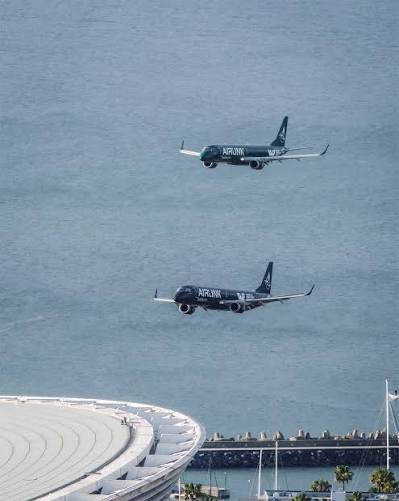
Two Airlink aircraft crossed the stadium in formation, creating a dramatic scene above the packed venue shortly before kick-off.
The Airlink flyover was part of the pre-match spectacle surrounding the Springboks and All Blacks, with the aircraft carrying special liveries representing the two rugby rivals.
For spectators, the Airlink flyover was an unexpected visual highlight. Cameras captured the aircraft from inside the stadium and from surrounding areas, and those videos quickly spread across social media.
The footage also made the Airlink flyover appear exceptionally close to the stadium roof, prompting questions from viewers about the aircraft’s altitude.
What the numbers actually show
Flightradar24 analysed available flight-tracking information after the Airlink flyover.
Its analysis found that the lead aircraft’s lowest reported standard-pressure altitude was around 50 feet. After accounting for local atmospheric pressure and the height of DHL Stadium, Flightradar24 estimated the aircraft passed approximately 41 to 46 feet above the roof.
The figure is an estimate, not a direct measurement of the physical distance between the aircraft and the stadium.
That distinction is important when describing the Airlink flyover. The available data supports the conclusion that the aircraft passed very low over the stadium, but it does not establish that either aircraft was about to collide with the building
Experts see more than a spectacular picture
The reaction to the Airlink flyover has not been unanimous.
Chris Martinus, president of the Aircraft Owners and Pilots Association South Africa, acknowledged the excitement surrounding the display but raised concerns about the amount of room available to pilots if something unexpected occurred.
Speaking to CapeTalk, Martinus described the manoeuvre from a safety perspective as “a little unwise.”
His comments do not mean that the Airlink flyover has been officially found to be unsafe. Instead, they highlight the aviation question surrounding a flight conducted at such a low altitude above a crowded venue.
Airlink has defended the Airlink flyover, saying it was carefully planned and rehearsed.
The airline said the South African Civil Aviation Authority and Air Traffic Navigation Services provided guidance, approval and support for the operation.
Airlink also said each aircraft had three senior captains aboard and that the jets were not carrying passengers during the display.
The airline maintains that recorded flight data showed the aircraft remained within the approved altitude and speed limits.
A spectacular moment with a serious question
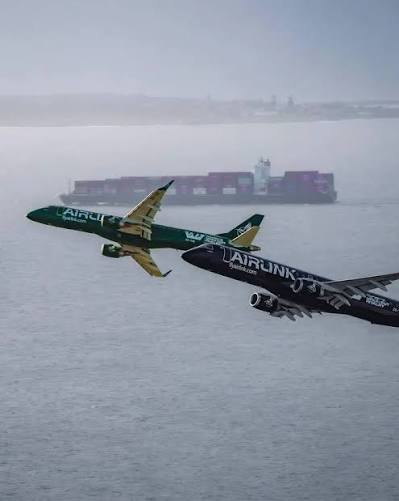
Airlink flyover
There is little doubt that the Airlink flyover achieved one thing: it got everyone’s attention.
Rugby fans inside DHL Stadium saw an extraordinary pre-match spectacle, while people who watched the footage online were left debating just how close the aircraft appeared to the stadium.
The Airlink flyover also connected a modern sporting event with one of South Africa’s most recognisable rugby memories.
For supporters, it was a celebration of the Springboks-All Blacks rivalry and the skill of the pilots.
For aviation professionals, it has prompted questions about margins and procedures.
And for the thousands who looked up as the aircraft passed overhead, the Airlink flyover was a few seconds they are unlikely to forget.
Full statement from SACAA
The South African Civil Aviation Authority (SACAA) can confirm that it is looking into the flypast that took place on Saturday 29 August 2026 ahead of the international rugby fixture between the Springboks and the All Blacks teams.
Subsequent to the flypast, the SACAA began ongoing compliance verifications and can confirm the following information to date: Airlink submitted three applications for flypasts related to the rugby matches of which the flypast under discussion is the second of the three applications.
The applications were submitted in line with the regulatory provisions governing non-passenger or cargocarrying flights conducted in terms of the provisions of Part 91.06.32.
Following the SACAA approval, the first flypast took place on 22 August 2026 in Johannesburg, and the second one took place on 29 August 2026. In relation to the second flypast, the operator submitted the application with supporting documentation applicable to such operations.
The necessary processes including the practice flight in a simulator in preparation for the Saturday flight and a safety briefing was conducted ahead of the operation as required by the regulations. This was approved by the Regulator, in line with the requirements for Special Air Events.
Following various discussions in the media relating to the events of the past weekend, the SACAA initiated compliance verifications, engaged the operator, obtained the Flight Data Recording downloads as well as other additional requirements.
The Regulator has begun its analysis process and has requested additional information from the operator to reach an informed position. 1 A full report with recommendations will be shared with the operator once the assessment has been completed by the SACAA. Further to this, the Regulator was notified by the operator on Wednesday, 1 September 2026, that it is withdrawing its application for approval for a third flypast that was planned for this coming weekend. The SACAA, as the safety net of the South African skies, gives the public the assurance that aviation safety and security compliance will always remain paramount and is not negotiable.
South Africa has one of the most sought-after aviation talents in the world and as a country we remain proud of the 0% record in fatal accidents in the commercial airline operations space for over four decades. This is a record we intend to uphold well into the future, and it is therefore critical that we interrogate this past weekend’s events with clear minds and data at our disposal to determine if there were any safety concerns which warrant a review, as we seek to continuously strengthen our safety standards.
Our State is ranked seventh globally and first in Africa for our aviation safety standards by the International Civil Aviation Organization, a United Nation’s specialised agency on civil aviation safety and security. This is achieved with a culture of compliance and a South African aviation industry that prioritises aviation safety and security.