Literacy: 52,000 resources successfully distributed across eight South African provinces
Reading Time: 4 minutesDuring 2025, Nal’ibali distributed more than 52,000 literacy resources across eight South African provinces. Read the full annual report.
Image Credit: Chenspec on Pixabay
Literacy is one of the most powerful tools for breaking the cycle of poverty, improving education outcomes, and creating stronger communities. In South Africa, literacy extends far beyond learning to read and write in a classroom. It is about creating a culture where children, parents, educators, caregivers and entire communities see reading as a lifelong habit.
The Nal’ibali Annual Report 2025 highlights how initiatives are transforming lives through storytelling, reading clubs, family engagement and community partnerships. Rather than focusing only on school performance, the organisation demonstrates that sustainable empowerment begins wherever children encounter books, stories and supportive adults.
Why this matters in South Africa
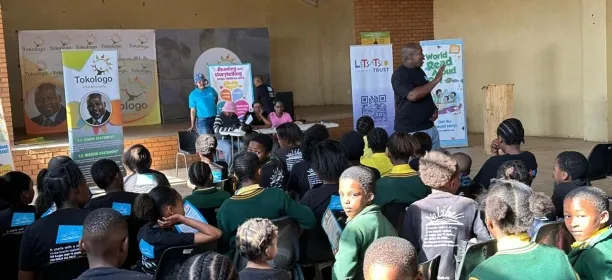
South Africa continues to face significant educational challenges, particularly in early-grade reading. Many children grow up in homes where books are scarce, while schools often work within limited resources. This makes community-based educational programmes essential.
Developing strong skills helps children:
- Improve reading comprehension.
- Develop language and communication skills.
- Build confidence in learning.
- Strengthen critical thinking.
- Improve future employment opportunities.
- Encourage creativity through storytelling and writing.
The report shows that the abilities to read and write should not be viewed solely as an educational responsibility. Instead, it becomes a shared responsibility between families, schools, libraries, community organisations and government.
Building empowerment through communities
One of the strongest themes throughout the report is that successful programmes rely on community participation.
During 2025, Nal’ibali distributed more than 52,000 resources across eight South African provinces. These included:
- Children’s storybooks.
- Reading club resources.
- Literacy promotion materials.
- Anthologies.
- Nal’ibali supplements.
These resources supported activities in:
- Homes.
- Schools.
- Early Childhood Development (ECD) centres.
- Libraries.
- Community reading clubs.
By expanding access to reading materials, communities are better equipped to develop lasting reading habits among children.
Reading and writing well is about families too
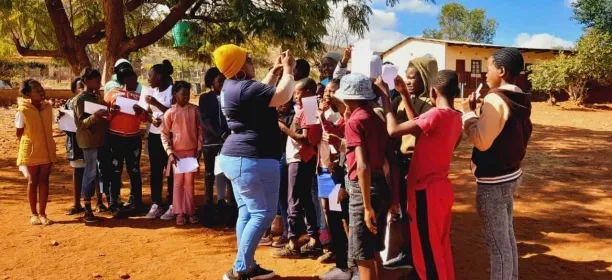
The report shows that successful abilities to read and write begins long before a child enters formal schooling.
One example is the Men’s Literacy Imbizo Programme, which encourages fathers and male caregivers to become active participants in children’s reading journeys. The initiative promotes:
- Positive fatherhood.
- Community-based literacy hubs.
- Reading mentorship.
- Stronger family involvement.
By encouraging men to become literacy champions, the programme supports both children’s educational development and stronger family relationships.
Reading clubs create lifelong habits
Another important finding is the role of reading clubs in developing sustainable literacy.
Nal’ibali worked alongside the Department of Basic Education’s Reading Champions Programme in several provinces, including KwaZulu-Natal, Gauteng, Limpopo, North West and the Western Cape.
A structured six-week School-Based Reading Club Journey was introduced to help schools establish reading clubs that continue operating even after direct programme support ends.
This demonstrates that sustainable literacy depends on creating consistent opportunities for children to enjoy reading rather than treating books as classroom assignments alone.
Beyond book distribution
Modern literacy programmes increasingly rely on evidence to understand what works.
Nal’ibali strengthened its Monitoring, Evaluation, Reporting and Learning systems by introducing:
- A centralised data dashboard.
- Reading Club Observation Tools.
- Pre- and post-training assessments.
- Longitudinal tracking of literacy outcomes.
- Improved programme reporting.
Instead of only counting books distributed, these systems help measure behavioural changes and long-term development within communities.
Literacy festivals inspire young readers
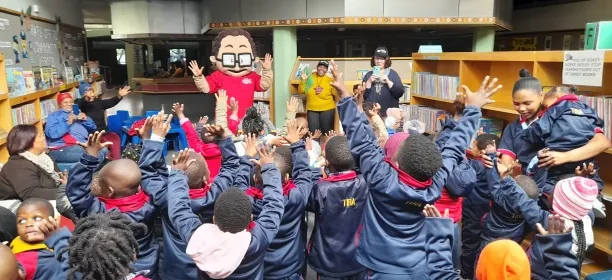
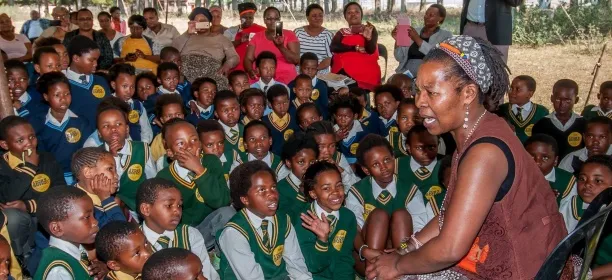
Across multiple provinces, literacy festivals, spelling bees, creative writing workshops and storytelling competitions encouraged children to become active participants in reading.
Projects reported:
- Hundreds of caregivers completing literacy training.
- Thousands of books and reading supplements distributed.
- Children publishing their own stories.
- Reading competitions in multiple languages.
- Holiday reading programmes.
- Community storytelling events.
These activities reinforce the idea that literacy should be enjoyable and culturally relevant, allowing children to connect with stories in both English and their home languages.
The future in South Africa
The report concludes that sustainable literacy depends on collaboration between educators, caregivers, volunteers, government departments and local communities.
Future priorities include:
- Expanding access to literacy opportunities.
- Strengthening community ownership.
- Supporting national reading initiatives.
- Building evidence-based programmes.
- Creating lifelong reading cultures.
As more organisations invest in literacy, South Africa moves closer to ensuring that every child has the opportunity to become a confident reader and lifelong learner. Creating a culture of reading is not a single project but an ongoing commitment that begins in homes, grows in schools and flourishes through communities working together.
Read the full report: